The #1 Concern Mixed Clients Bring Into Our Work - Rejection Sensitivity
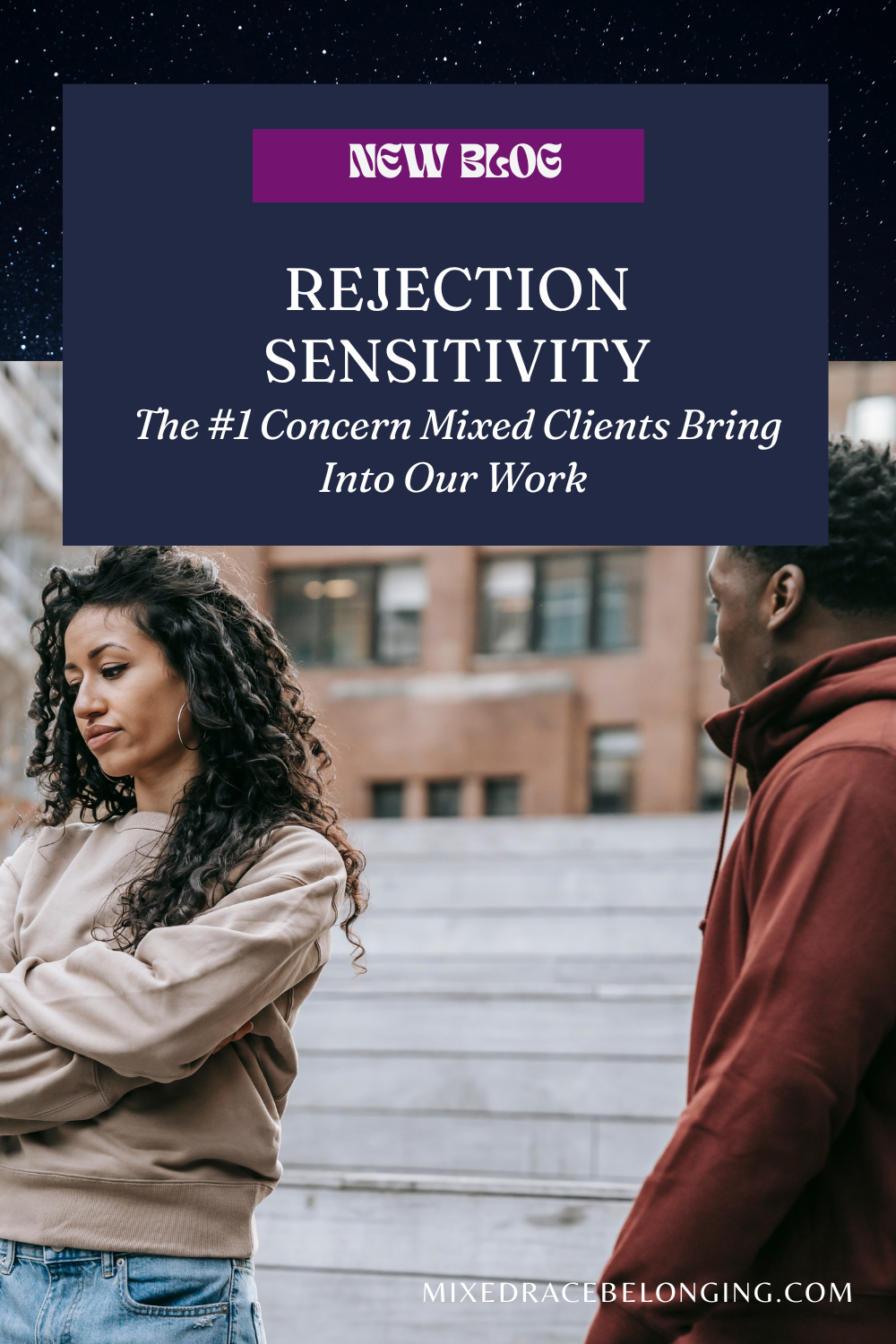
One of the most common concerns that my clients bring into our work is a deep fear of rejection.
Let’s talk about what that is, where it comes from, and what to do about it.
Rejection Sensitivity
If you are neurodivergent, you might be familiar with the term rejection sensitivity or rejection sensitive dysphoria. These terms describe symptoms that are often linked to those who have ADHD and autism because of the lasting impact of the repeated criticisms and rejections that neurodivergent people experience early on and throughout their life when they don’t meet societal norms or expectations.
As a result, people with ADHD or autism, for instance, often develop sensitivity around rejection, which causes them to experience further emotional distress and isolation.
Rejection and the Mixed Experience
Something similar happens for biracial and multiracial people because so many of us have repeated experiences of being misunderstood or rejected from childhood on. This is true even in the places where you are supposed to be loved and accepted unconditionally, like your school, family, or community.
These experiences can cause you to be hypervigilant in your interactions. You might constantly scan your interactions for proof that the person doesn't like you or is making assumptions about you that paint you in a poor light.
When it comes down to it, this is a protective mechanism helping you to avoid those experiences because they are so painful. In fact, research actually shows that the emotional pain of disconnection lives in the same place in our brains as does physical pain.
What Rejection Sensitivity is Costing You
But hypervigilance is only part of the story.
The other part is what you do when your hypervigilance detects a threat. When that happens, you might try to appease others and make them more comfortable so that you're not rejected, losing yourself in the process. That, or you withdraw to avoid the possibility of being rejected, only to feel even more lonely.
I call the pain, hypervigilance, and subsequent patterns we adopt to avoid more pain the mixed race belonging wound. This is a trauma that occurs in the context of monoracism, the kind of racism that discriminates against people who don’t fit into discrete racial categories.
This rejection sensitivity – your belonging wound - doesn’t just show up in situations where you really are being othered – it’s also at the ready even in situations where you might actually be able to build relationships.
Like when you assume someone is mad at you, even though they’re just asking a clarifying question.
Or you assume you’re being burdensome, when someone is just naming that they don’t have capacity to help you do something right now.
Even more so, it can also generalize and convince you that you can’t tolerate the discomfort of doing other hard things. You become so afraid of the feeling of rejection and the possibility of rejection that you avoid it at all costs, in all areas of your life:
You don’t put yourself up for a promotion because you don’t want to fail.
You don’t market your business on social media because you’re afraid of being cancelled, even though you desperately need the money.
You don’t go on dates because you anticipate you’ll be too much or not enough of something for them.
You don’t submit your beautiful art to the local exhibit.
At the end of the day, the issue is that while your protective patterns are preventing you from feeling hurt, it's also keeping you from getting what you really want - which is to feel connected to other people. To feel belonging. To be seen for who you are. To feel fulfilled in your life.
How to Finally Stop Feeling So Sensitive to Rejection
The truth is that to have those things, you actually have to put yourself out there. You have to be a bit vulnerable to have the kind of relationships and life experiences that you want.
The capacity, the courage to be visible, to take a risk, to be playful and experimental in your risk taking, is an ability that develops through practice. I help my clients gain this ability by:
Getting to the root of their unique protective patterns and unpacking the limiting beliefs that have been constructed as a result of very real painful experiences.
Validating their real experiences of rejection, while helping thembuild more discernment so they don’t see rejection around every corner.
Teaching them solid somatic skills to build the strength and capacity of their nervous system so they feel safer to start taking risks and being a little more vulnerable (baby steps!).
Practicing how to respond to and recover from those hard moments.
And I’d love to help you do the same so that:
You can keep feeling whole and confident in who you are, even when you’re microaggressed, so that you can keep seeking out connections with the right people.
You can remember that a “no” for a job, or after a first date, doesn’t mean you’re being completely rejected as a person and realize just how resilient you are.
And when you are actually criticized, mischaracterized, or rejected, you can take that as useful information about who and where you definitely don’t want to invest time or energy.
In Conclusion
Rejection has been a very real part of your experience — but it doesn’t have to be the main driver of how you move through the world.
If you want to feel less sensitive to rejection and finally start taking up space in your life, in your relationships, or at work, there are two ways to work with me.
1) The Mixed Race Belonging Collective
My online community for mixed race folks where you’ll feel less alone, learn somatic strategies to feel at home in your body, and gain skills to handle the hardest moments.
2) Bold Belonging
My 1:1 somatic coaching program where you’ll get to the root of your belonging wound and heal it, so you can finally feel whole and at home in your body everywhere you go.
BONUS: Freebie
And if you’re not quite ready to commit, I suggest signing up for my free ‘What Are You?’ Somatic Recovery Guide for Mixed People.
I look forward to working with you!
